
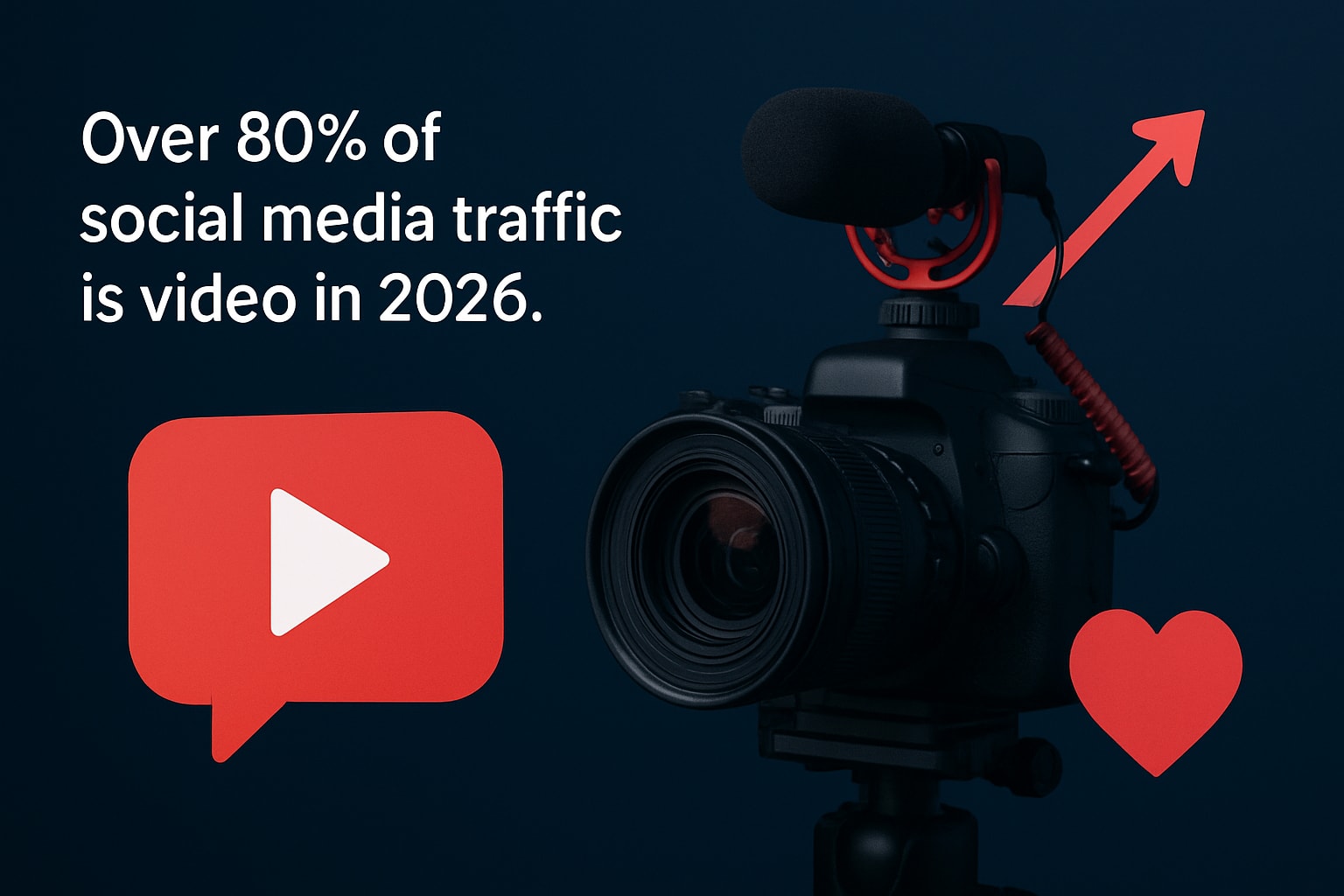

Over 80% of social media traffic in 2026 is video. That’s a lot of noise. If you’re making videos for social media, getting noticed is tougher than ever.
You’re not alone if you feel lost. Most guides just talk about gear or hacks, but what you really want is results. This guide is all about what actually works now.
We’ll break down how to plan, shoot, and edit, plus give you platform-specific tips and ways to get real engagement. It’s not about being flashy. It’s about being seen.
Understanding the 2026 Social Video Landscape
Video is everywhere in 2026, and it's not slowing down. If you’re making videos for social media, you need to know what’s actually getting seen. Let’s break down which platforms and formats matter, and what your audience expects now.

Platforms and Formats That Matter
Short-form video is the main battleground. TikTok, Instagram Reels, and YouTube Shorts are leading the pack, clocking the most daily views. LinkedIn has jumped in, with video engagement up 30 percent year-on-year. Facebook is still in the game, but it’s all about groups and community-driven clips. Stories, static photo posts, and unedited live streams? They’re fading out fast.
Here’s a quick look at where things stand:
| Platform | Winning Format | Engagement Focus |
|---|---|---|
| TikTok | Short-form | Retention, shares |
| Instagram Reels | Short-form | Trends, remixing |
| YouTube Shorts | Short-form | Search, replay |
| Short/long-form | Thought leadership | |
| Group videos | Community |
Brands that adapt their content for each platform win. You can’t just repost the same clip everywhere and hope for the best. Algorithms now push retention and shares, not just raw views. Sixty-five percent of viral videos in 2026 are under 60 seconds. If you want to get noticed, you have to know the rules of each platform. For a deeper dive into what works, check out these short-form video best practices.
What Audiences Expect Now
People are over the polished, over-produced stuff. The biggest trend in making videos for social media is authenticity. Gen Z and Alpha drive the trends, and even older audiences are getting on board. They want raw, real, and relatable content.
User-generated clips from events or daily life often outperform slick influencer campaigns. If your video feels like an ad, viewers will scroll right past it. Accessibility is now table stakes: captions, clear audio, and easy-to-read visuals are expected. If you’re not including everyone, you’re losing out on engagement.
The takeaway? If you’re making videos for social media, show real people, real moments, and keep it simple. Let your audience see themselves in your content. That’s what gets watched, shared, and remembered.
Planning Your Social Video: Goals, Stories, and Strategy
If you're making videos for social media in 2026, you need a plan. Winging it is a fast track to getting ignored. Let’s break down what works, what doesn’t, and how to set yourself up for results you can actually measure.

Setting Goals That Actually Matter
Going viral sounds cool, but it’s not a real strategy for making videos for social media. If you’re just chasing numbers, you’ll burn out and your brand will feel empty. What matters now? Engagement, trust, and building a community that sticks around.
Think about what you want people to do after they watch. Comment? Share? Hit follow? Brands that measure these things see real growth, not just big but empty view counts. For example, a small coffee shop sharing regular behind the scenes videos can build a loyal local following, even if the views aren’t huge.
And don’t forget the call to action. Videos with a clear CTA get 40 percent more engagement. Focus on creating habits, not just hype.
Storytelling in a 15-Second World
You’ve got two seconds to hook someone. That’s it. If your video doesn’t grab attention immediately, it’s gone. For making videos for social media, structure matters—start with something real. Show a before and after, a genuine reaction, or a ‘day in the life’ moment.
People want authenticity, not polish. Gen Z and Alpha can spot fake from a mile away. If you want real engagement, show real people, not just products. In fact, user-generated event content is beating influencer campaigns for reach and trust. If you want to dive deeper, check out these user-generated content strategies for practical ideas.
Let your story be short, punchy, and honest. The less scripted, the better.
Planning for Consistency and Scale
Making videos for social media isn’t a one-off job. Consistency wins, every time. Batch filming is your friend: film several short clips in one go, then schedule them out. Use a content calendar so you never run out of ideas, and keep an eye on trends you can jump on quickly.
Repurposing is key. One shoot can give you ten different videos—just cut, crop, or change the intro for each platform. Smart brands aren’t making new content every day, they’re making the most of what they’ve already got.
Stay flexible, but don’t sacrifice quality for quantity. If you find a format that works, double down until the audience says otherwise. Making videos for social media is about showing up, not showing off.
Shooting Video That Doesn’t Suck
Let’s be honest: making videos for social media isn’t about having the fanciest camera. Most viral clips are shot on budget phones, sometimes even with cracked screens. You need gear that works, not gear that impresses. If you’re stressing about which camera to buy, you’re already missing the point.

Gear: What You Need (and What You Don’t)
For making videos for social media, your phone is usually enough. You don’t need a DSLR, unless you’re filming a Netflix special. What matters is stabilisation, so your shots don’t look like you’re running from a bear. Use a cheap tripod or lean your phone against a mug.
Lighting is next. Natural light is your best friend. If you film indoors, a basic ring light does the trick. Don’t obsess over brands, just make sure your face isn’t in shadow.
Sound is underrated. People forgive shaky video, but if they can’t hear you, they’ll scroll. Grab a clip-on mic, or at least record in a quiet spot. Most of the time, good audio is more important than good video.
Framing, Lighting, and Audio in Plain English
Keep framing simple. Follow the rule of thirds: put your eyes a third of the way down the screen. Don’t cut off your head. No one wants to watch a talking forehead.
Shoot at eye level. It feels more natural and less like a security camera. Headroom matters too. Leave a bit of space above your head, but not so much you look like you’re sinking.
Use what’s around you for light. A window beats any lamp. If you’re outside, face the light source. For audio, avoid wind and background noise. A cheap mic can make a massive difference. According to recent data, videos with clear audio keep 70% more viewers. That’s a big deal when making videos for social media.
Shooting for Authenticity
Forget staged moments. The best making videos for social media show real people, real reactions, and the stuff that doesn’t go to plan. If you mess up, keep rolling. Outtakes and mistakes often get more engagement than polished takes.
Get your team or friends involved. Audiences can spot actors from a mile away. Behind-the-scenes clips, genuine laughter, and raw reactions all feel more honest. People want to see what’s actually happening, not a scripted ad.
In the end, making videos for social media is about capturing moments, not manufacturing them. Keep it real, keep it simple, and don’t overthink it.
Editing for Impact: Fast, Simple, and Authentic
When it comes to making videos for social media in 2026, editing is where the magic happens—or where it all falls apart. The tools are better, but what actually matters is speed, clarity, and keeping things real. Let’s break it down.

Editing Tools and Shortcuts
Editing for making videos for social media doesn’t mean you need fancy gear. Most creators use their phones. Mobile apps like CapCut, InShot, and VN let you trim, add captions, and cut dead space in minutes. If you prefer bigger screens, desktop tools like DaVinci Resolve or Premiere Rush are still fast, but most people stick to mobile for speed.
AI is useful—but only for grunt work. Apps auto-caption, find highlights, and suggest cuts. You stay in control of what feels real. Here’s a quick comparison:
| Tool | Best for | Cost |
|---|---|---|
| CapCut | Fast edits | Free |
| InShot | Social formats | Free |
| VN | Batch editing | Free |
The bottom line? Spend less time fiddling with effects and more time sharing your story. Making videos for social media is about what you show, not how slick the edit looks.
Making Videos Watchable Without Sound
Most people scroll with the sound off. In fact, 85% of Facebook users watch videos without sound. If your video needs audio to make sense, you’re losing viewers.
Add captions. Most editing apps can auto-generate them. Use on-screen text for key points or reactions. Make sure your visuals are clear—if someone can’t tell what’s happening without listening, rethink the shot.
Here’s a quick checklist:
- Add readable captions to every video.
- Use bold text for main ideas.
- Make visuals strong enough to tell the story solo.
When making videos for social media, silent doesn’t mean boring. Captioned videos get watched longer and shared more.
Keeping It Real in the Edit
It’s tempting to polish every second, but over-editing makes videos feel fake. Leave in the outtakes. Let real laughs or awkward moments stay. Brands are sharing blooper reels and unfiltered clips because people trust what’s messy and human.
Don’t slap on heavy filters or cut every pause. Let your personality come through. People want to see the real you, not a perfect version.
When making videos for social media, remember: authenticity beats perfection every time. If your edit feels too smooth, you’re probably hiding the good stuff.
Platform-Specific Tactics for 2026
Figuring out where to post is half the battle when making videos for social media. Every platform has its own rules, trends, and quirks. What works on one might flop on another. Here’s how to play it smart in 2026.
TikTok and Reels: Short, Fast, and Fun
If you’re making videos for social media in 2026, TikTok and Instagram Reels are still the top dogs. Trends move fast here. Short, punchy clips, quick edits, and trending sounds win every time. Interactive challenges, duets, and stitches are everywhere.
- Fast cuts keep people’s attention.
- Trending audio can double your engagement. In fact, TikTok posts generate 5.3% average engagement rate, which is wild.
- Brands are using duets to piggyback off viral moments.
For more on what works, check out this Instagram Reels explained guide. Make your videos feel like they belong on the platform, not like ads.
YouTube Shorts and Beyond
YouTube Shorts isn’t just for entertainment anymore. Educational content is making waves. If you’re making videos for social media here, focus on searchability. Good titles and thumbnails still matter a lot.
- Tutorials, “how-to’s,” and quick explainers do well.
- Shorts get boosted if they hook viewers in under three seconds.
- Suggested feeds are your friend, so experiment with keywords.
Short-form video is still king, but don’t ignore the power of a solid thumbnail and clear message.
LinkedIn, Facebook, and Newcomers
LinkedIn videos are all about professional stories and team moments. People want to see real faces, not just logos. Facebook is moving towards group-focused content, so videos that spark conversation in communities get pushed up.
- Share behind-the-scenes, quick team intros, or wins.
- On Facebook, think about what your group wants to talk about.
- Keep an eye on emerging platforms, but don’t jump on every new thing.
Making videos for social media here is about trust and connection, not just reach.
Cross-Posting Without Losing Impact
You can get more mileage out of your content by cross-posting, but don’t just copy-paste. Adapt your videos for each platform. That means adjusting aspect ratios, tweaking captions, and changing your hook to fit the audience.
- One video can become three versions with different intros.
- Always add captions for accessibility.
- Test which style works best on each platform.
When making videos for social media, the small tweaks make a big difference in how people engage.
Getting Real Engagement (Not Just Views)
Algorithms are different now. In 2026, platforms care less about how many people scroll past your video and more about who actually interacts with it. Shares, comments, and especially DMs matter way more than views. Watch time and replays are signals you can’t fake. If people send your video to a friend, the algorithm takes that as a green light to push it out further. This is why making videos for social media that feel worth sharing is the only game that counts. Want proof that video is where the action is? Video comprises 82% of internet traffic in 2025, and the number keeps rising.
Algorithms in 2026: What’s Changed
Forget the old playbook. In 2026, algorithms reward you for sparking real conversations, not just passive views. If you’re making videos for social media and hoping for reach, focus on what keeps people watching and triggers them to share, reply, or rewatch.
- Shares and saves are king
- DMs boost your video’s reach
- Watch time and replays are tracked
The more your clip gets shared in private messages, the more likely it is to go viral. Engagement is about depth, not just numbers.
Building Community, Not Just Audience
You can’t fake a community. Brands that win at making videos for social media reply to comments, feature real user videos, and run challenges that get people involved. It’s the difference between shouting into the void and actually having a conversation.
Try these:
- Reply to comments quickly
- Share customer videos (with permission)
- Run weekly challenges or Q&As
When your viewers feel seen, they’re more likely to stick around and share your content.
Measuring What Matters
Vanity metrics are out. When you’re making videos for social media, focus on the numbers that actually signal value: saves, shares, and replies. These tell you if people care enough to keep or pass on your content.
Use analytics tools to see where people drop off. If you notice a sharp exit at 10 seconds, your hook needs work. Adjust, test, and repeat. The best brands tweak video length, captions, and even posting times based on what the data says, not just what looks good on a report.
Avoiding Burnout and Staying Consistent
Posting every day isn’t realistic for most people. The secret to making videos for social media without burning out? Batch filming. Set aside a few hours to shoot a bunch of clips, then schedule them out. Use templates for intros and outros to save time.
Sustainability beats chasing viral hits. You’re better off posting two good videos a week than burning out after a month of daily uploads. Consistency builds trust, and trust builds engagement.
So, now you’ve got the lowdown on making videos that actually get noticed in 2026, from picking the right platform to keeping things real and relatable. If you’re ready to turn your next event into a stream of genuine, shareable moments—without the stress or massive production bills—why not chat with someone who can help? I’d love to help you figure out how SureShot can make your event content stand out and spread naturally across social. If you fancy a quick, no-pressure conversation, just Book a meeting and let’s see what’s possible together.
Article written using RankPill.