

Video Content Marketing Strategy: A Step-By-Step Guide
Event organizers face a content paradox: hundreds of attendees capturing video on their phones, yet most brands struggle to fill their marketing calendar with authentic footage. Building a video content marketing strategy changes that equation entirely.
Video dominates social feeds, drives higher engagement than static images, and builds trust faster than any other format. But for event professionals, the challenge isn't understanding video's power, it's creating enough quality content without draining budgets on expensive production crews.
This guide walks you through building a video content marketing strategy from scratch. You'll learn how to define your goals, identify the right video formats, plan distribution across platforms, and measure what actually matters. We'll also explore how user-generated content from your attendees can become your most valuable (and cost-effective) video asset, which is exactly why we built SureShot to help event organizers tap into the footage their communities are already creating.
What a video content marketing strategy includes
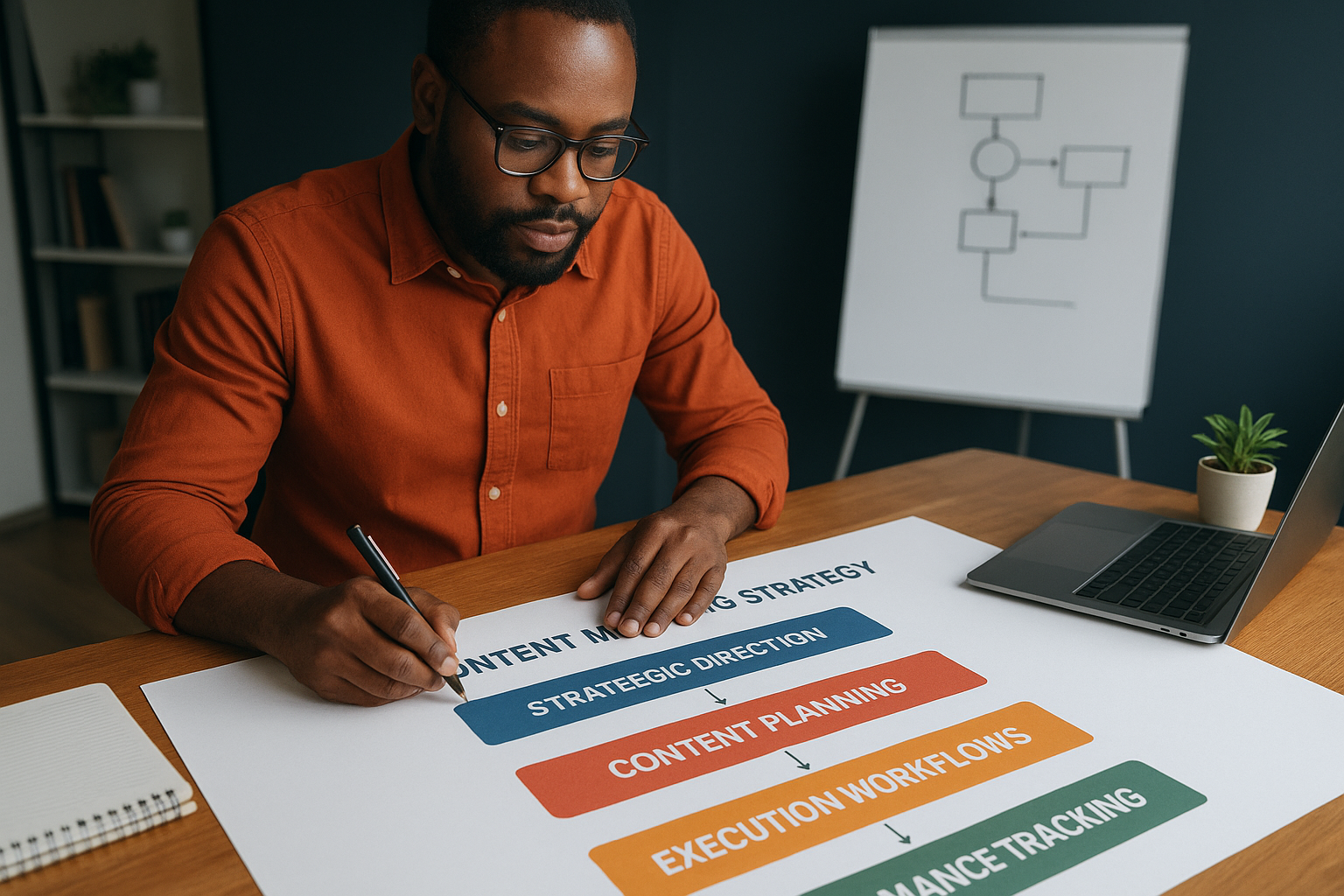
A complete video content marketing strategy consists of four interconnected layers: strategic direction, content planning, execution workflows, and performance tracking. Think of it as a blueprint that connects your business objectives to the videos you create and the platforms where you share them. Without these components working together, you'll end up with random video content that looks busy but delivers little measurable impact.
Core strategic elements
Your foundation starts with clear business goals tied to specific metrics. You need to define whether you're driving ticket sales, building brand awareness, or nurturing community engagement. Each goal demands different video approaches and success measures.
Next, you map your audience segments and their journey stages. An event organizer targeting first-time attendees needs different video content than one nurturing loyalty among returning fans. Your strategy must answer who watches, what they need at each stage, and which platforms they use most.
The strategic layer also includes your competitive positioning and unique angle. What story can you tell through video that competitors can't? For event brands, this often means authentic behind-the-scenes footage or attendee perspectives rather than polished commercials.
A video content marketing strategy without audience segmentation is like hosting an event without knowing who bought tickets.
Content production framework
Your production framework outlines video formats, themes, and creation methods. This includes decisions about live streams versus edited clips, short-form vertical videos versus long-form horizontal content, and whether you're shooting everything in-house or tapping into user-generated material.
Create a content calendar template that maps video topics to your event schedule and marketing calendar. This prevents last-minute scrambles and ensures you capture footage when it matters most. Your framework should also define quality standards, brand guidelines for video style, and approval processes.
Budget allocation sits here too. You need resource plans for equipment, editing software, personnel time, and any external production costs. Many event organizers discover that leveraging attendee-created content dramatically reduces these expenses while increasing authenticity.
Distribution and measurement systems
Distribution planning covers platform selection and posting schedules. You'll define which videos go to Instagram Reels, YouTube, TikTok, LinkedIn, or your website. Each platform has different optimal lengths, formats, and posting frequencies.
Your measurement system tracks key performance indicators like view counts, watch time, engagement rates, click-throughs, and conversion metrics. Set up dashboards that connect video performance to actual business outcomes (registrations, ticket sales, community growth).
Build in optimization loops that use performance data to improve future content. This means A/B testing thumbnails, analyzing which topics resonate, and identifying your best-performing video lengths and styles. You should also plan content repurposing strategies so one event captures multiple video assets across formats.
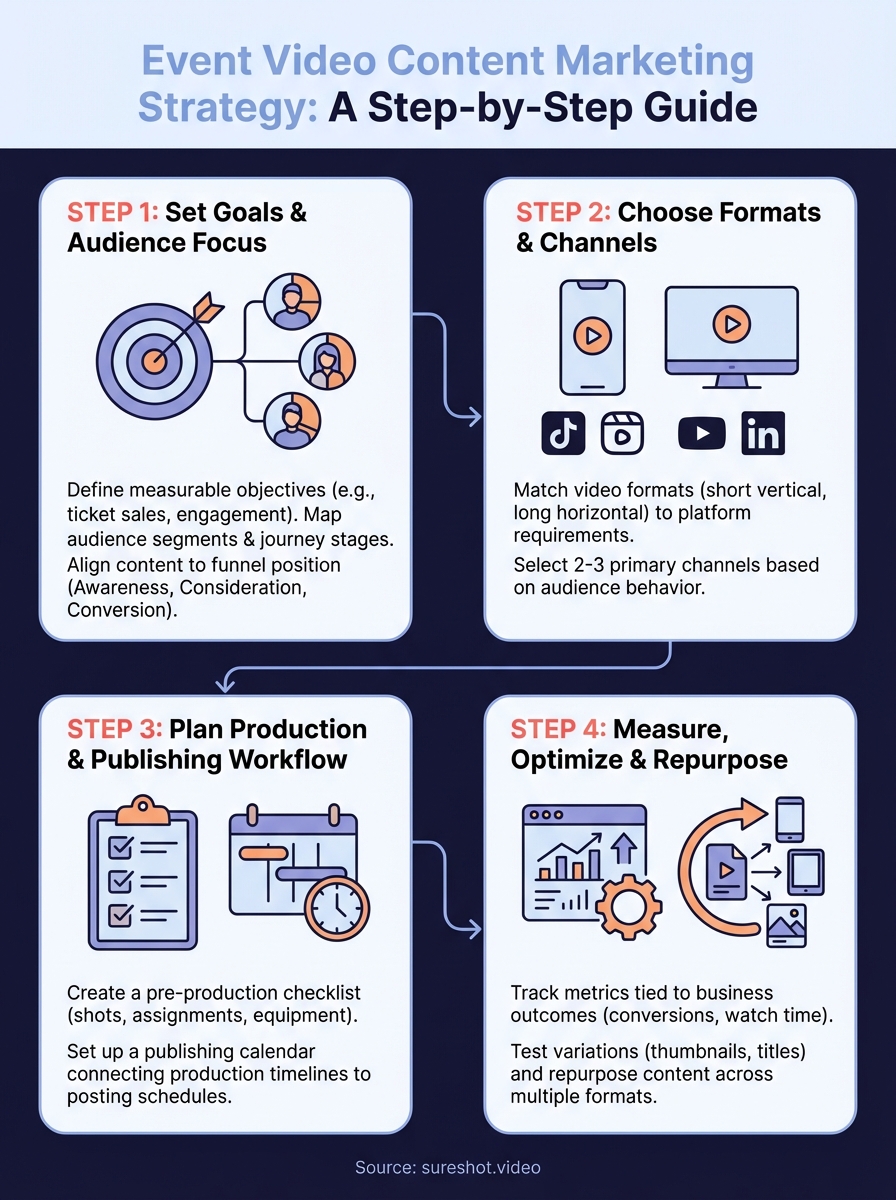
Step 1. Set goals, audience, and funnel focus
Your video content marketing strategy begins with three foundational decisions: what you want to achieve, who you're reaching, and where they are in their relationship with your event brand. Start here before you shoot a single frame or choose any platform. These choices determine every other aspect of your strategy, from production style to distribution channels.
Define measurable business objectives
You need specific, quantifiable goals that tie video content directly to business outcomes. Avoid vague aims like "increase awareness" and instead set targets such as "generate 500 ticket pre-sales through video campaigns" or "grow Instagram following by 25% in Q2 using video content."
Break each goal into clear metrics you can track. If your objective is driving registrations, measure click-through rates from video posts, landing page conversions, and cost per acquisition. For community building, track comment counts, shares, video completion rates, and follower growth. Event organizers often set goals across multiple areas: early ticket sales, sponsor visibility, post-event buzz, and year-round community engagement.
Goals without metrics turn your video strategy into guesswork instead of a system you can improve.
Map audience segments and journey stages
Identify your distinct audience groups and what each needs from your video content. First-time event attendees require different information than returning fans. Corporate sponsors want proof of reach and engagement. Media partners need shareable, newsworthy footage that tells compelling stories.
Document each segment's pain points and motivations. What questions do they ask? What concerns prevent them from buying tickets? Which platforms do they use most? A music festival targeting Gen Z attendees focuses on TikTok and Instagram Reels, while a B2B conference targeting executives prioritizes LinkedIn video and email campaigns.
Align content to funnel position
Match your video types to three funnel stages: awareness, consideration, and conversion. Top-of-funnel awareness content includes highlight reels, behind-the-scenes clips, and attendee testimonials that introduce your event to new audiences. These videos prioritize reach and shareability over direct calls-to-action.
Mid-funnel consideration videos provide detailed information like speaker interviews, venue tours, and FAQ explainers that help prospects evaluate whether to attend. Bottom-funnel conversion content creates urgency through countdown videos, early-bird deadline reminders, and limited-availability announcements. You'll also need post-event retention videos that keep your community engaged until the next gathering.
Step 2. Choose formats and channels that fit
Your video content marketing strategy lives or dies based on format and platform choices. You can create brilliant video content, but if you post landscape YouTube videos on TikTok or 10-minute deep dives on Instagram Reels, your message disappears into the algorithm void. The right format-channel pairing amplifies your reach, while mismatches waste production effort and budget.
Platform algorithms reward native content that matches their technical specifications and audience expectations. Each channel has optimal video lengths, aspect ratios, and content styles that determine whether your videos get distribution or get buried. Event organizers need to choose strategically rather than trying to be everywhere at once.
Match video formats to platform requirements
Start by identifying which video formats serve your goals and audience segments from Step 1. Short-form vertical videos (15-90 seconds) dominate mobile-first platforms. Long-form horizontal content (10+ minutes) works for educational material on YouTube. Mid-length videos (1-3 minutes) perform well across LinkedIn and Facebook.
Each format requires different production approaches. User-generated content from attendees naturally fits short-form vertical formats because most people already shoot on phones. Professionally produced speaker interviews or panel discussions work better as longer horizontal videos that you can edit into multiple clips.
Here's how major platforms align with video formats:
| Platform | Optimal Length | Aspect Ratio | Best Content Type |
|---|---|---|---|
| TikTok | 15-60 seconds | 9:16 (vertical) | Trending moments, behind-scenes |
| Instagram Reels | 15-90 seconds | 9:16 (vertical) | Highlights, testimonials |
| YouTube | 8-15 minutes | 16:9 (horizontal) | Full sessions, interviews |
| 30-90 seconds | 1:1 or 16:9 | Professional insights, speaker clips | |
| 1-3 minutes | 1:1 or 16:9 | Community stories, event recaps |
Your video format decisions should follow where your audience already watches, not where you wish they would.
Select channels based on audience behavior
Choose 2-3 primary platforms where your target audience actively consumes video content rather than spreading yourself thin across every channel. Review your audience data from Step 1 to identify their platform preferences. A music festival targeting college students prioritizes TikTok and Instagram, while a professional conference focuses on LinkedIn and YouTube.
Test your platform assumptions with small content experiments before committing full production resources. Post similar video content across different channels and track which generates the best engagement rates, view duration, and conversions. Double down on platforms that deliver results and cut platforms that drain resources without return.
Step 3. Plan production and publishing workflow
You need a repeatable system that moves videos from concept to published content without chaos or missed deadlines. Your video content marketing strategy falls apart when production becomes bottlenecked by unclear processes, missing approvals, or last-minute scrambles for footage. Event organizers juggling multiple projects need workflows that run smoothly whether you're capturing content at a live event or editing clips in your office.
Building your workflow means documenting every step from initial planning through final publication. This includes who captures footage, how raw files get transferred, who edits and approves, where finished videos get stored, and when they go live across different platforms. Clear workflows prevent duplicated effort and ensure nothing slips through the cracks.
Create a pre-production checklist
Your pre-production phase determines what content you'll capture and how. Start by defining specific video objectives for each event or content piece. List the shots you need, the message each video should convey, and which audience segment it targets. This prevents shooting random footage hoping something works later.
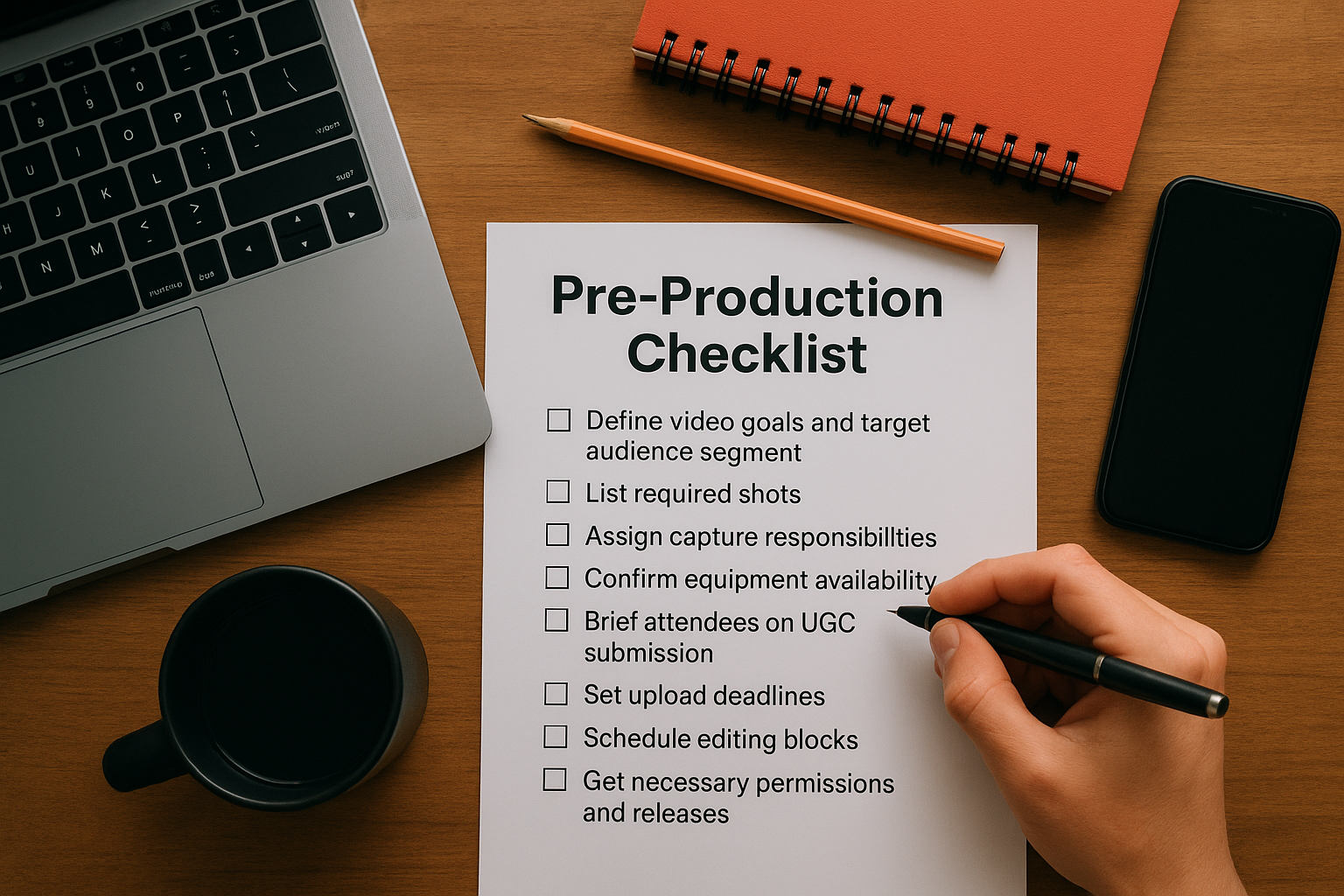
Build a pre-event preparation template that covers equipment checks, content brief creation, and team assignments. Here's a practical checklist you can adapt:
Pre-Production Checklist Template:
- Define video goals and target audience segment
- List required shots (5-10 specific moments or angles)
- Assign capture responsibilities (who shoots what)
- Confirm equipment availability and battery status
- Brief attendees on UGC submission process and PIN codes
- Set upload deadlines and file naming conventions
- Schedule editing blocks in calendar
- Get necessary permissions and releases
Planning what you'll shoot before the event starts eliminates the guesswork that wastes hours reviewing unusable footage.
Set up a publishing calendar system
Your publishing calendar connects production timelines to platform-specific posting schedules. Map out when you'll shoot, edit, approve, and publish each video piece across your chosen channels from Step 2. Account for platform differences like TikTok's daily posting rhythm versus YouTube's weekly schedule.
Use a simple spreadsheet or project management tool to track video status from raw footage through publication. Include columns for video title, target platform, production stage, assigned editor, approval status, scheduled publish date, and actual performance metrics. This visibility helps your team coordinate efforts and prevents bottlenecks where videos sit waiting for approval.
Step 4. Measure, optimize, and repurpose
Your video content marketing strategy requires continuous refinement based on actual performance data, not assumptions about what works. You need to track which videos drive ticket sales, which formats hold attention, and which platforms deliver the best return on your production time. Measurement transforms your strategy from static plan into a system that improves with every video you publish.
Track metrics that connect to business outcomes
Focus on performance indicators that directly relate to your goals from Step 1 rather than vanity metrics like total views. If your objective is ticket sales, track click-through rates from video posts to registration pages, conversion rates, and revenue attributed to specific video campaigns. For community building goals, measure comment depth, share counts, follower growth rate, and returning viewer percentages.
Set up tracking dashboards that show how individual videos perform across different platforms. You need to know which video topics generate the most engagement, what optimal length keeps viewers watching, and when your audience is most active. Use platform analytics from TikTok, Instagram Insights, YouTube Studio, and LinkedIn Analytics to compare performance patterns.
Data without action wastes the effort you spent collecting it, so review your metrics weekly and adjust your next batch of content accordingly.
Test variations and double down on winners
Run simple A/B tests on elements you can control: thumbnail images, video titles, opening hooks, calls-to-action, and posting times. Change one variable at a time so you know which adjustment drives better results. When you discover a winning format or topic, create more content in that style rather than chasing every trend.
Extract maximum value through strategic repurposing
Transform each event capture into multiple video assets across different formats and platforms. A 10-minute speaker interview becomes a full YouTube video, three 60-second Instagram Reels highlighting key quotes, a LinkedIn post with the most professional insight, and several TikTok clips capturing surprising moments. User-generated content from attendees multiplies this advantage because you already have diverse angles and authentic perspectives built in.
Create a repurposing workflow that happens immediately after each event while footage is fresh. Identify your best moments, extract platform-specific clips, and schedule them across your publishing calendar over the following weeks to maintain consistent presence between events.
Wrap-up and next steps
Your video content marketing strategy now has a complete framework: clear goals tied to metrics, formats matched to platforms, production workflows that scale, and measurement systems that drive improvement. You've learned how to build a repeatable process that generates authentic content without breaking your budget.
Start by implementing one step at a time. Set your goals and audience profiles this week, then choose your primary platform and format combination. Build your production workflow around your next event and capture both professional footage and attendee perspectives. Most event organizers discover that user-generated content becomes their most valuable asset once they have a system to collect and organize it.
SureShot makes collecting attendee video effortless through simple PIN-based uploads and AI-assisted curation. Book a demo to see how event organizers turn hundreds of phone recordings into a steady stream of authentic marketing content.